Tropical rainforest plants adaptations to environment images are available in this site. Tropical rainforest plants adaptations to environment are a topic that is being searched for and liked by netizens today. You can Find and Download the Tropical rainforest plants adaptations to environment files here. Download all free photos.
If you’re looking for tropical rainforest plants adaptations to environment pictures information related to the tropical rainforest plants adaptations to environment interest, you have visit the right blog. Our website always provides you with suggestions for viewing the highest quality video and image content, please kindly surf and find more enlightening video content and graphics that fit your interests.
They cannot survive in very dry weather and thrive in climates with high humidity and rainfall. So the plants here have drip tips and waxy surfaces on leaves to shed the excess water. Also, the weather in the rain forest is warm throughout the year. Banana trees are cultivated as a popular fruit source. With warm temperatures, water and an abundance of food, tropical rain forests support thousands of wildlife species.
Tropical Rainforest Plants Adaptations To Environment. This results is a soil that is poor but plants have shallow roots to help capture nutrients from the top level of soil. The equatorial latitude of tropical rainforests and tropical deciduous forests keeps day length and mean temperature fairly constant throughout the year. Banana trees are cultivated as a popular fruit source. It is home to around 40,000 plant species, nearly 1,300 bird species, 3,000 types of fish, 427 species of mammals, and 2.5 million different insects.
 Rainforest Diorama Rainforest project, Diorama kids From pinterest.com
They cannot survive in very dry weather and thrive in climates with high humidity and rainfall. Tropical rainforest plants also have adaptations to take in what little sunlight is available on the dark forest floor. Some adaptations of plants are following: The growth is slow as the plants do not have to make much food. For better survive in the hot, wet tropics, plants of the tropical rainforest have had to develop special features called adaptation. In this article, let’s explore top seven tropical rainforest animal adaptations:
Because cacao trees grow well in the shade, the rainforest does not need to be cut down in order to grow cocoa.
The sunlight is a huge part of photosynthesis, which keeps the plants live. Tropical rainforests are the most biologically diverse terrestrial ecosystems in the world. In this article, let’s explore top seven tropical rainforest animal adaptations: Tropical rainforests receive 80 to 400 inches of rain a year, which can lead to bacteria and fungi growth, soil erosion, nutrient leaching and poor soil quality. Camouflage, mimicry, having a limited diet, poison, reduction of size and stature, and changing of habitats with illustrations. Different types of cactus, joshua tree etc.
 Source: pinterest.com
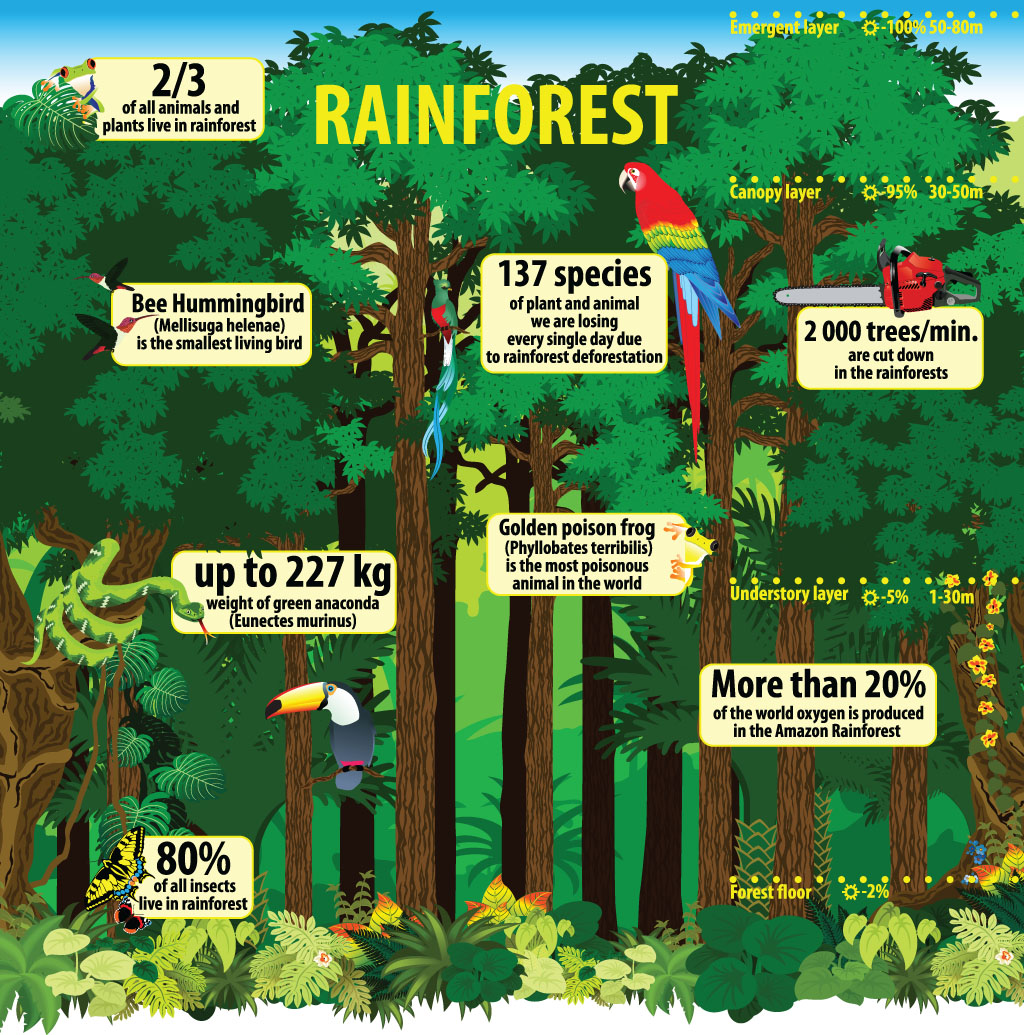
Most plants in the tropical rainforest have adapted to the strong sunlight, heavy rain, thin soils and dark conditions in the undergrowth. Different types of cactus, joshua tree etc. Tropical rainforests contain far more species of plants and animals than any other biome. It is home to around 40,000 plant species, nearly 1,300 bird species, 3,000 types of fish, 427 species of mammals, and 2.5 million different insects. Plants adaptation to rain forest:
 Source: pinterest.com
Camouflage, mimicry, having a limited diet, poison, reduction of size and stature, and changing of habitats with illustrations. There are many types of plants in the tropical rainforest, which is a hot, humid biome that gets over 200 inches of rain a year, creating the perfect conditions for biodiversity. Because cacao trees grow well in the shade, the rainforest does not need to be cut down in order to grow cocoa. Plant adaptations in the tropical rainforest. Camouflage, mimicry, having a limited diet, poison, reduction of size and stature, and changing of habitats with illustrations.
 Source: pinterest.com
Tropical rainforests are the most biologically diverse terrestrial ecosystems in the world. Many rain forest animals use adaptations to carve out their own niches and protect. For example, some trees, such as the kapok, grow very tall because of the competition for sunlight. The glucose gives the plants energy to grow. Tropical rainforest plants are plants that grows naturally in a tropical climate.
 Source: pinterest.com
Tropical rainforests are the most biologically diverse terrestrial ecosystems in the world. The following adaptations allow plants to survive in the conditions of the rainforest. Plants grow rapidly and quickly use up any organic material left from decomposing plants and animals. Also, the weather in the rain forest is warm throughout the year. Tropical rainforests contain far more species of plants and animals than any other biome.
 Source: pinterest.com
Plants grow rapidly and quickly use up any organic material left from decomposing plants and animals. Tropical rainforests are the most biologically diverse terrestrial ecosystems in the world. The plant produces an edible fruit that comes from the sterile reproductive system of an unfertilised female flower. The equatorial latitude of tropical rainforests and tropical deciduous forests keeps day length and mean temperature fairly constant throughout the year. They are home to many resources, but deforestation could result in negative impacts to the planet.
 Source: pinterest.com
Other plants, like orchids, bromeliads and ferns, grow as epiphytes high up in the canopy where there is more sunlight. Frequently, people think of the tropical rainforest as a. Also, the weather in the rain forest is warm throughout the year. For better survive in the hot, wet tropics, plants of the tropical rainforest have had to develop special features called adaptation. Although there is no cold season during which plants experience.
 Source: pinterest.com
For better survive in the hot, wet tropics, plants of the tropical rainforest have had to develop special features called adaptation. So the plants here have drip tips and waxy surfaces on leaves to shed the excess water. Some adaptations of plants are following: In colder climates north of the equator, tropical plants can be grown as houseplants and set outside during the warm, sunny months. The following adaptations allow plants to survive in the conditions of the rainforest.
 Source: pinterest.com
Some adaptations of plants are following: In tropical rainforests, many plants live as epiphytes to receive the necessary sunlight and moisture to complete their life cycle. Other plants, like orchids, bromeliads and ferns, grow as epiphytes high up in the canopy where there is more sunlight. This page contains information on rainforest plants, and includes examples of many amazing species. A rain forest is an environment that gets a lot of rain.
 Source: pinterest.com
This is then used to turn carbon dioxide and water into glucose. The tropical rainforest is very thick, and not much sunlight is able to penetrate to the forest floor. Tropical rainforests are so big that they are divided into four zones. The equatorial latitude of tropical rainforests and tropical deciduous forests keeps day length and mean temperature fairly constant throughout the year. With warm temperatures, water and an abundance of food, tropical rain forests support thousands of wildlife species.
Source: pinterest.com
Tropical rainforest plants also have adaptations to take in what little sunlight is available on the dark forest floor. The following adaptations allow plants to survive in the conditions of the rainforest. Some adaptations of plants are following: Leaves with burgundy or purple colors are common; Plants adaptation to rain forest:
 Source: pinterest.com
You’ll find out what kind of plants live in rainforests, and how they’ve adapted to the rainforest environment. Vegetation in the tropical rainforest has adapted to thrive in its hot, wet climate in a range of ways. Tropical rainforest plants also have adaptations to take in what little sunlight is available on the dark forest floor. Some adaptations of plants are following: This page contains information on rainforest plants, and includes examples of many amazing species.
This site is an open community for users to do submittion their favorite wallpapers on the internet, all images or pictures in this website are for personal wallpaper use only, it is stricly prohibited to use this wallpaper for commercial purposes, if you are the author and find this image is shared without your permission, please kindly raise a DMCA report to Us.
If you find this site convienient, please support us by sharing this posts to your preference social media accounts like Facebook, Instagram and so on or you can also save this blog page with the title tropical rainforest plants adaptations to environment by using Ctrl + D for devices a laptop with a Windows operating system or Command + D for laptops with an Apple operating system. If you use a smartphone, you can also use the drawer menu of the browser you are using. Whether it’s a Windows, Mac, iOS or Android operating system, you will still be able to bookmark this website.


